Why You Crave More Carbs When the Weather Cools Down (and 5 Smart Swaps)

On this page
- Why cold-weather carb cravings can happen
- Five smart swaps for satisfying winter cravings
- 1. Sugary cereal or a pastry → warm oats with fruit and protein
- 2. A plain white-pasta bowl → whole-grain pasta with beans and vegetables
- 3. Chips or crackers → hummus with warm pita and crunchy vegetables
- 4. Creamy soup with little staying power → a hearty bean or lentil soup
- 5. A frosted dessert → warm fruit with oats and yogurt
- Make the meal satisfying—not restrictive
- Sources
Key takeaways
- As days get colder, cravings for comfort carbs can feel stronger.
- Here’s what the evidence says—and five cozy, balanced swaps to try.
As days get colder, cravings for comfort carbs can feel stronger. Here’s what the evidence says—and five cozy, balanced swaps to try.
When the air turns chilly, a bowl of pasta, warm bread or something sweet can suddenly sound especially appealing. You’re not imagining the seasonal shift—but it also doesn’t mean your body automatically needs a large extra serving of carbohydrates every time the temperature drops. Seasonal variation in energy intake is influenced by many factors, and evidence is mixed.[2]
Cold exposure may nudge some people to eat more.[1]
Shorter days and mood can influence what sounds good.[3]
Routine and comfort cues matter too.[4]
The research is mixed, so the most useful response isn’t to ban carbs.[6]
Choose satisfying, nourishing versions that still feel cozy.
Why cold-weather carb cravings can happen
Cold can affect appetite, but responses differ. A review of small, short-term adult studies found a modest tendency for people to eat more during cold exposure, though the studies varied and several found no clear change.[1] In one controlled crossover study, 47 adults ate more during a 24-hour stay at 19°C than at 23.5°C, but the difference did not persist the next day.[9] That laboratory result does not tell us that everyone needs more food throughout winter—or that the extra intake was specifically a carb craving.[9]
Less daylight may affect mood and appetite for some people. Winter-pattern seasonal affective disorder (SAD) can include appetite changes and cravings for carbohydrate-rich foods. Cravings by themselves do not mean someone has SAD; persistent seasonal low mood, low energy, sleep changes or loss of interest are reasons to speak with a health professional.[3]
Comfort and routine matter, too. Warm meals can simply feel comforting, and cooler weather can change what we cook, how much time we spend indoors and when we snack.[4] The reasons people eat differently across seasons are varied; temperature is only one possible influence.[2]
The practical takeaway: honor hunger rather than trying to white-knuckle through it, but make the carb choice work harder for you.[2] Harvard’s Healthy Eating Plate emphasizes the type of carbohydrate—such as whole grains, vegetables, fruit and beans—alongside protein and produce, rather than treating all carbs as interchangeable.[5][6]
Five smart swaps for satisfying winter cravings
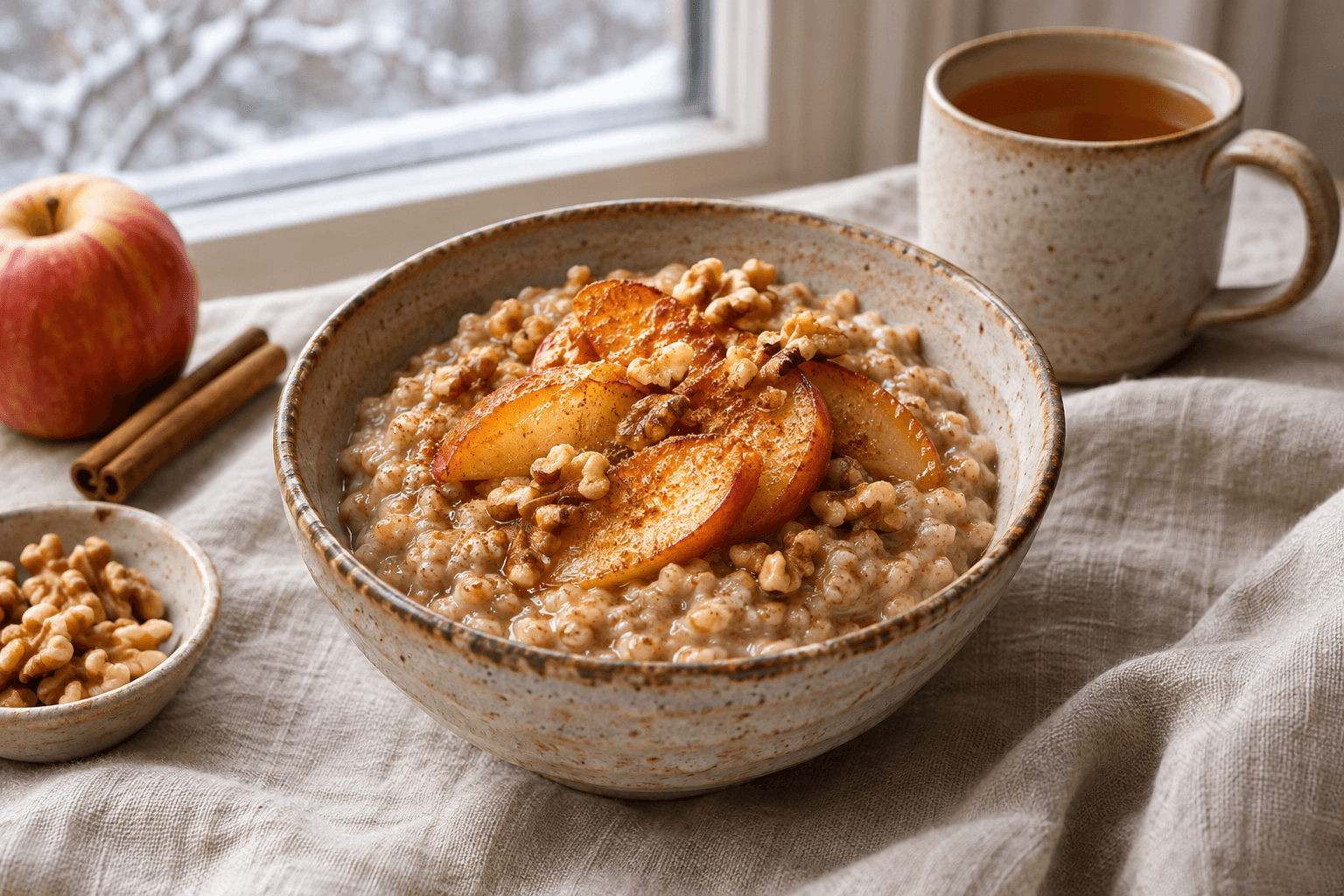
1. Sugary cereal or a pastry → warm oats with fruit and protein
Make oatmeal with milk or a fortified alternative, then add sliced apple or berries and a spoonful of nuts or nut butter. If you like, serve it with plain yogurt or an egg on the side.[5] You still get a warm, carbohydrate-rich breakfast, with fiber and a source of protein to make it more substantial. Oats, fruit, nuts and legumes are among the foods Harvard highlights as fiber sources.[7]
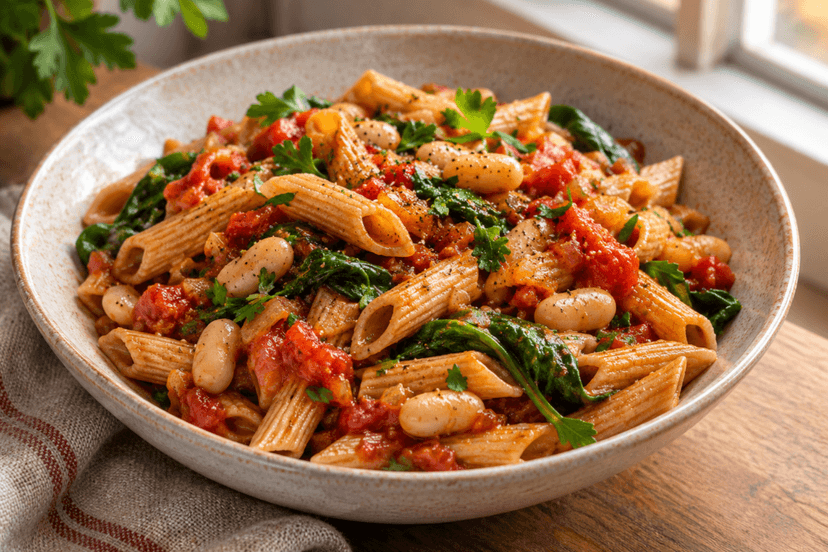
2. A plain white-pasta bowl → whole-grain pasta with beans and vegetables
Keep the pasta, but try whole-wheat pasta and add white beans or lentils, spinach or frozen vegetables, and a tomato-based sauce. Whole grains, vegetables and beans are carbohydrate foods; choosing them is about adding variety and fiber, not eliminating carbs.[5]
3. Chips or crackers → hummus with warm pita and crunchy vegetables
For a salty, snacky craving, pair hummus with carrots, peppers or cucumber and a small whole-grain pita.[5] If you want something warm, toast the pita or warm the hummus slightly.[8] This keeps the satisfying dip-and-crunch ritual while adding beans and vegetables.[5]

4. Creamy soup with little staying power → a hearty bean or lentil soup
Build a cozy bowl with vegetables, beans or lentils, broth, and—if you want—some barley or whole-grain bread.[5] A soup can be comforting without relying only on cream, cheese or refined bread.[8] Add a protein source that suits you, and adjust ingredients to your needs and preferences.
5. A frosted dessert → warm fruit with oats and yogurt
Microwave or bake an apple or pear with cinnamon and a sprinkle of oats and chopped nuts; top it with plain yogurt if you like.[5] It still feels like a warm treat, while whole fruit and oats contribute fiber.[6] You can sweeten it to taste rather than assuming dessert has to be off the menu.
Make the meal satisfying—not restrictive
A simple template for lunch or dinner is vegetables or fruit, a protein food, and a carbohydrate you enjoy—such as potatoes, rice, pasta, bread, oats or beans.[5] For a hot meal, that could be vegetable-and-lentil soup with whole-grain toast, or roasted vegetables, fish or tofu, and potatoes. The exact mix and portions depend on your appetite, activity, health needs and what feels good to you.
If you’re genuinely hungry, eat enough.[2] If a craving is mostly about wanting something warm and comforting, try changing the temperature or format of a familiar food rather than labeling it “bad.”[3][8] For more seasonal routine ideas, see our winter hydration guide.
If low mood, changes in sleep or appetite, or loss of interest are persistent or recurring with the seasons, consider talking with a healthcare professional.[4] Those symptoms deserve more than a food swap.[4]
This article is for general information, not individualized medical advice. It has not received a clinician’s medical review.
Sources
- Millet et al., Effects of Acute Heat and Cold Exposures on Energy Intake: Systematic Review and Meta-Analysis
- Fujihira & Takahashi, Factors Explaining Seasonal Variation in Energy Intake: A Review
- National Institute of Mental Health, Seasonal Affective Disorder
- University of Queensland, Why People Feel Hungrier and Crave Comfort Foods When Weather Turns Cold
- Harvard T.H. Chan School of Public Health, Healthy Eating Plate
- Harvard T.H. Chan School of Public Health, Carbohydrates: Quality Matters
- Harvard T.H. Chan School of Public Health, Fiber
- British Heart Foundation, Winter Comfort Food: Why Do We Crave It?
- Unlu et al., Cold Induces Increased Ad Libitum Energy Intake: Controlled Crossover Trial in Adults